

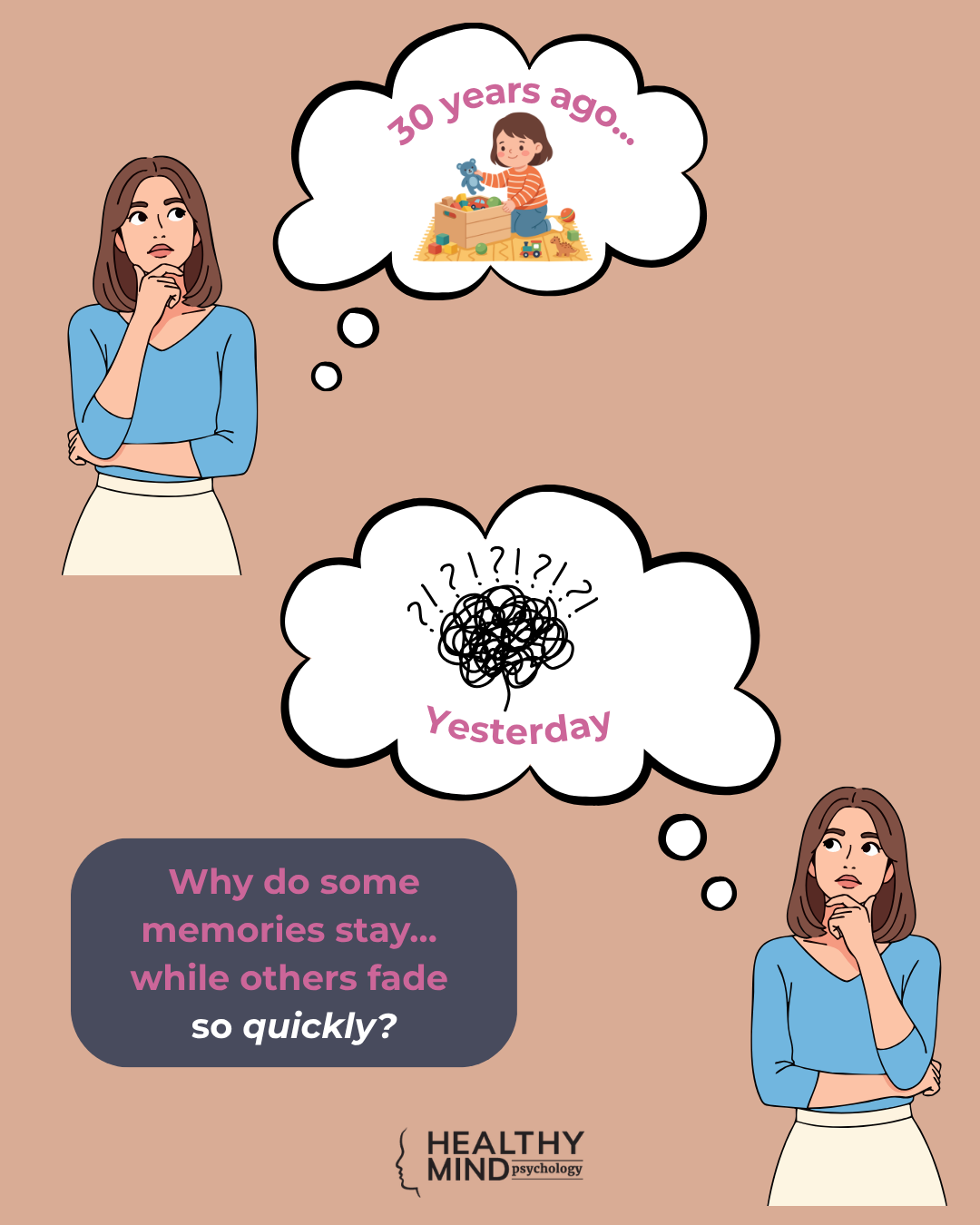
Have you ever walked into a room and completely forgotten why you went in there?
Or found yourself able to recall a random detail from years ago; a conversation, a smell, a moment, while struggling to remember something from earlier that same day?
It can feel inconsistent. Even frustrating. At times, it might lead us to question our memory altogether.
But what if this isn’t a flaw in your memory… but a reflection of how memory is actually designed to work?
In Why We Remember, Dr Charan Ranganath explores this idea in a way that feels both grounding and, in many ways, reassuring. Memory isn’t a perfect recording of the past. It isn’t a system designed to capture everything equally.
Instead, it’s selective. Dynamic. Shaped by attention, meaning, and context.
Memory isn’t about storing everything
One of the most common assumptions we make about memory is that it should behave like a storage system, taking in information and holding onto it for later use.
But that’s not quite how it works.
Your brain is constantly filtering. Deciding what’s relevant, what’s meaningful, and what can be let go. Not because it’s inefficient, but because it has to be.
Consider how much information you encounter in a single day. Messages, conversations, images, decisions, background noise – it’s a constant stream of input.
If your brain attempted to store everything equally, it would quickly become overwhelmed.
So instead, it prioritises, and what it prioritises isn’t random.
What we remember is shaped by meaning
In Why We Remember, Dr Ranganath highlights that memory is closely linked to what feels significant.
Moments that carry emotional weight, novelty, or personal meaning are more likely to be remembered. They stand out against the background of everyday experience.
This is why certain memories feel vivid – not because they were objectively more important, but because they were processed differently at the time.
Perhaps you were more present, more emotionally engaged, or more aware of what was happening, and because of that, the memory was encoded more strongly.
In contrast, moments that feel routine or repetitive often pass by without much notice. Not because they don’t matter, but because they don’t require the same level of attention.
Context matters more than we think
Another reason memory can feel inconsistent is the role of context.
You might recognise the experience of entering a new room and suddenly forgetting what you intended to do. According to memory research, this can be explained by something called “event boundaries”.
When your environment changes (even slightly), your brain updates its sense of context. It effectively marks the end of one “event” and the beginning of another, so the intention you had in the previous space doesn’t always carry over.
It hasn’t disappeared, it’s just no longer in the same context.
Understanding this can be surprisingly relieving. What feels like forgetfulness is often just the brain doing its job, organising experience into manageable pieces.
Memory isn’t fixed – it’s reconstructed
Another important idea from Dr Ranganath’s work is that memory isn’t static.
When you recall something, you’re not simply replaying a stored recording. You’re reconstructing it.
That reconstruction is influenced by:
- your current perspective
- your emotional state
- what you’ve learned since
- and what feels relevant now
This means memories can shift over time.
Sometimes they soften or become clearer. Sometimes they take on new meaning.
This isn’t inaccuracy in a negative sense, it’s flexibility. It allows your past experiences to remain connected to your present life, rather than frozen in time.
Why we remember certain periods more vividly
You might also notice that certain phases of your life feel easier to recall than others.
For many people, memories from adolescence and early adulthood stand out. Songs, films, friendships, experiences – they tend to feel more vivid and more emotionally charged.
This is known as the “reminiscence bump”. During this period, your identity is forming. You’re experiencing things for the first time, making decisions that shape who you are, and attaching meaning to those experiences. So it makes sense that your brain gives those memories more weight.
They’re not just events, they’re part of how you understand yourself.
Maybe forgetting isn’t the problem
When we expect memory to be consistent and complete, it’s easy to interpret forgetting as something going wrong.
But when we understand memory as selective, contextual, and shaped by meaning, it begins to look different.
Forgetting becomes part of the process, a way of making space and prioritising what matters.
It doesn’t mean your memory is failing, it just means your brain is working within its design.
A different way of looking at memory
So perhaps the question shifts slightly.
Instead of asking:
“Why can’t I remember everything?”
We might ask:
“What is my brain choosing to hold onto, and why?”
That question invites curiosity rather than criticism, because memory isn’t just about the past, it’s about how we organise our experience of the world, and the more we understand that, the less we may need to question whether it’s working, and the more we can begin to notice how it already is.