

Why Rest Is the Missing Piece in Recovery
Have you ever noticed that pain seems worse at night? Or that when you haven’t slept well, even small discomforts feel bigger, heavier, and harder to cope with?
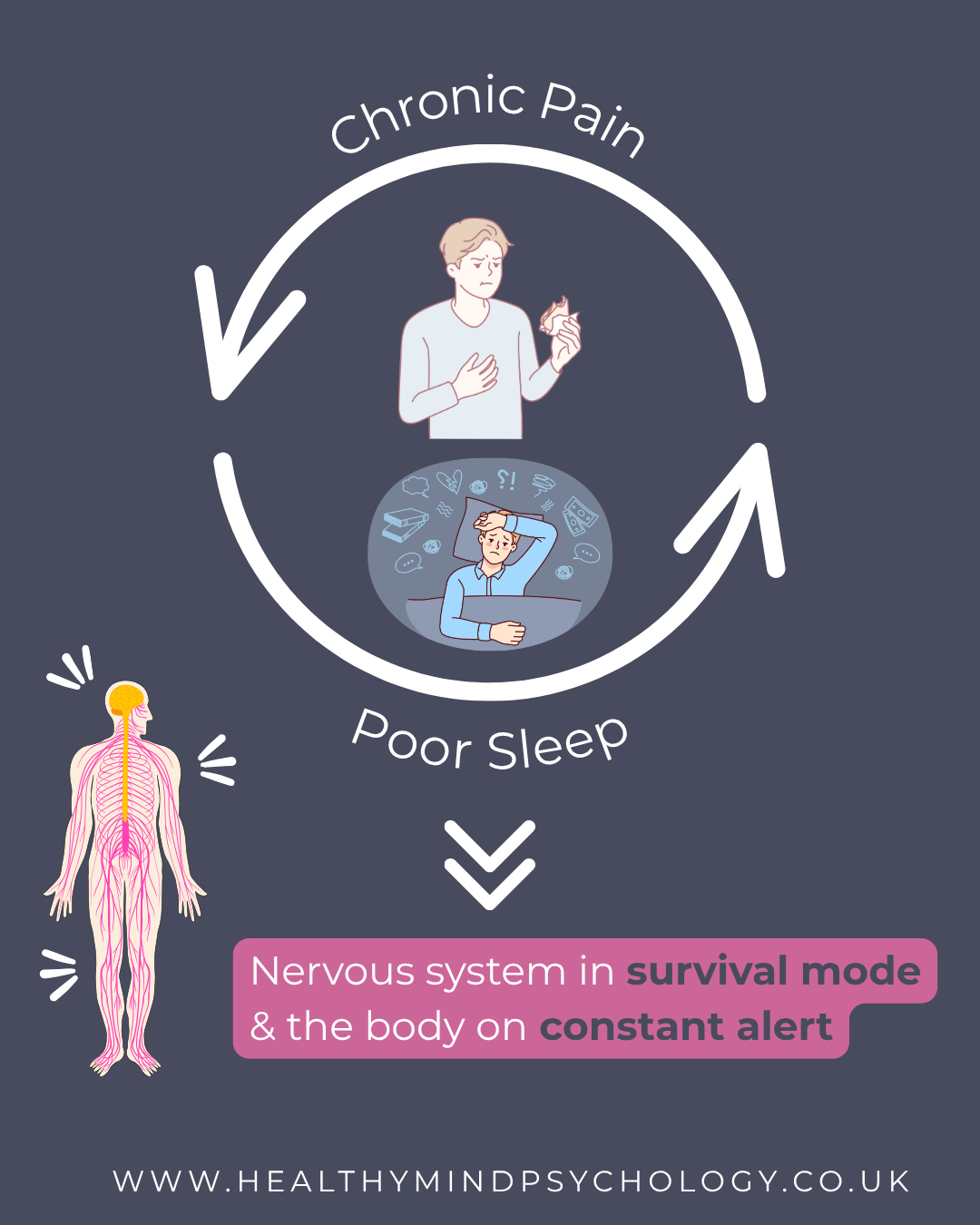
It’s not your imagination. Research has shown that sleep and pain share a deeply connected, two-way relationship. Poor sleep heightens pain sensitivity, while chronic pain disrupts sleep – creating a vicious cycle that can feel impossible to break.
In his book Back in Control: A Surgeon’s Roadmap Out of Chronic Pain, Dr David Hanscom explores this cycle in depth, revealing how the nervous system becomes trapped in patterns of hyper-vigilance and exhaustion. The result? A body and mind constantly running on empty, unable to repair or reset.
So how exactly does this happen – and more importantly, how can we begin to restore rest when the body feels wired and worn out?
Why Pain Feels Worse at Night
When the world quiets down, your internal sensations become louder. During the day, distraction helps mute physical discomfort – conversations, work, or background noise draw attention away from pain. But at night, with fewer external stimuli, the brain tunes inward.
Dr Hanscom explains that this inward focus can heighten the brain’s threat response, amplifying pain signals. Pain is not simply a reflection of what’s happening in the body – it’s the brain’s perception of danger. When the nervous system is fatigued or on alert, it interprets even minor sensations as threats, increasing the experience of pain.
Have you ever lain awake, trying to find a comfortable position, only to feel your discomfort growing the more you notice it? That’s your brain’s survival system doing its job a little too well.
How Poor Sleep Intensifies Pain Sensitivity
The relationship between sleep and pain is bi-directional, they feed each other. When sleep is disrupted, the body produces higher levels of stress hormones like cortisol and lower levels of pain-modulating chemicals such as serotonin.
Studies published in journals such as Sleep and PAIN have found that even a single night of poor sleep can increase pain sensitivity by as much as 20–30%. Chronic sleep deprivation can rewire the brain’s pain networks, especially in the somatosensory cortex, which processes sensory information.
In Back in Control, Hanscom notes that more than 40% of people with chronic pain consistently fail to get a full night’s sleep – twice the rate of the general population. When the body doesn’t enter deep restorative sleep, muscles can’t heal, inflammation rises, and the nervous system remains on high alert.
It’s like trying to recover from an injury while running a marathon, your system never truly gets the chance to rest.
The Role of the Nervous System: Why It’s Not “Just in Your Head”
The pain–sleep connection highlights how inseparable the mind and body really are. When you’re stuck in survival mode – anxious, in pain, and exhausted, your body keeps producing adrenaline to help you “cope.” Over time, this chemical storm keeps the nervous system in a hyperaroused state.
Hanscom calls this “the adrenaline survival response.” It’s the body’s way of protecting itself, but it becomes draining when prolonged. The result is a cycle where exhaustion fuels stress, stress fuels pain, and pain fuels more exhaustion.
Does that sound familiar? Perhaps you’ve noticed how a stressful week leads to poor sleep, which makes your body ache, which then makes you more irritable and tense. That’s the body’s protective system in overdrive.
Breaking the Cycle: Small Shifts, Big Changes
The good news, and there is good news, is that this cycle can be reversed. Neuroplasticity (the brain’s ability to rewire itself) means that new, healthier sleep–pain patterns can be learned.
Dr Hanscom advocates for a multifaceted approach to calming the nervous system. Some of his key strategies include:
- Creating a consistent sleep routine – going to bed and waking up at the same time each day helps retrain the body’s internal clock.
- Practising breathwork before bed – slow nasal breathing activates the parasympathetic nervous system, signalling safety and rest.
- Externalising thoughts – journaling or expressive writing before bed can offload stress and calm an overactive mind.
- Reducing stimulation – limiting screen time and caffeine late in the day allows the body to wind down naturally.
These practices might sound simple, but they work by sending the brain a powerful message: “I’m safe now.” Over time, that safety becomes a new default – and sleep begins to return.
The Psychology of Rest: Letting Go of “Pushing Through”
Many people living with chronic pain struggle with guilt around rest. There’s a belief that “doing nothing” is lazy, or that the only way forward is to push harder. But rest isn’t passive – it’s productive repair.
From a psychological standpoint, learning to rest involves trusting that your body can regulate itself again. It means creating moments of safety, not just physically but emotionally. As Hanscom writes, true healing begins when you stop fighting the pain and start listening to what it’s trying to tell you.
So, what might it look like for you to make space for rest, not as an afterthought, but as medicine?
Relearning the Art of Sleep
Recovery from chronic pain isn’t just about fixing what’s “wrong” in the body, it’s about teaching the nervous system that it no longer needs to be in survival mode. Sleep is a crucial part of that message.
When you learn to regulate your body’s stress response, your brain can finally switch from protection to restoration. Pain often quiets down, not because it has been “cured,” but because the body is no longer on constant alert.
Rest, then, isn’t a reward for healing, it’s one of the ways we heal.
In the words of Dr Hanscom:
“Calm your nervous system first, and the rest will follow.”
To find out how we can help you or for further information you can read our services here or please contact us below: