

If you live with chronic pain, you’ve probably been told at some point that your pain is “in your head.”
And while that phrase is often dismissive and deeply invalidating, there is a truth we need to reclaim from it.
Pain is never just a body problem or just a mind problem.
It is a whole system experience shaped by the brain, the gut, the immune system, past stress, and even the stories we tell ourselves about what our pain means.
Understanding this bigger picture can feel empowering, especially when pain has been framed as something mysterious or unexplainable. So today, I want to explore what really sits “beyond the injury” and why pain persists long after tissues have healed.
Pain begins in the body, but it is completed in the brain
Pain starts with nociception, which is the nervous system detecting potential threat or tissue damage. But nociception is not the same as pain. Pain is created by the brain after it evaluates danger, past experiences, emotional context, and expectations.
This explains why:
- Two people with the same injury can have completely different pain levels
- Pain can continue even when scans look “normal”
- Stress, fear, and past trauma can intensify pain signals
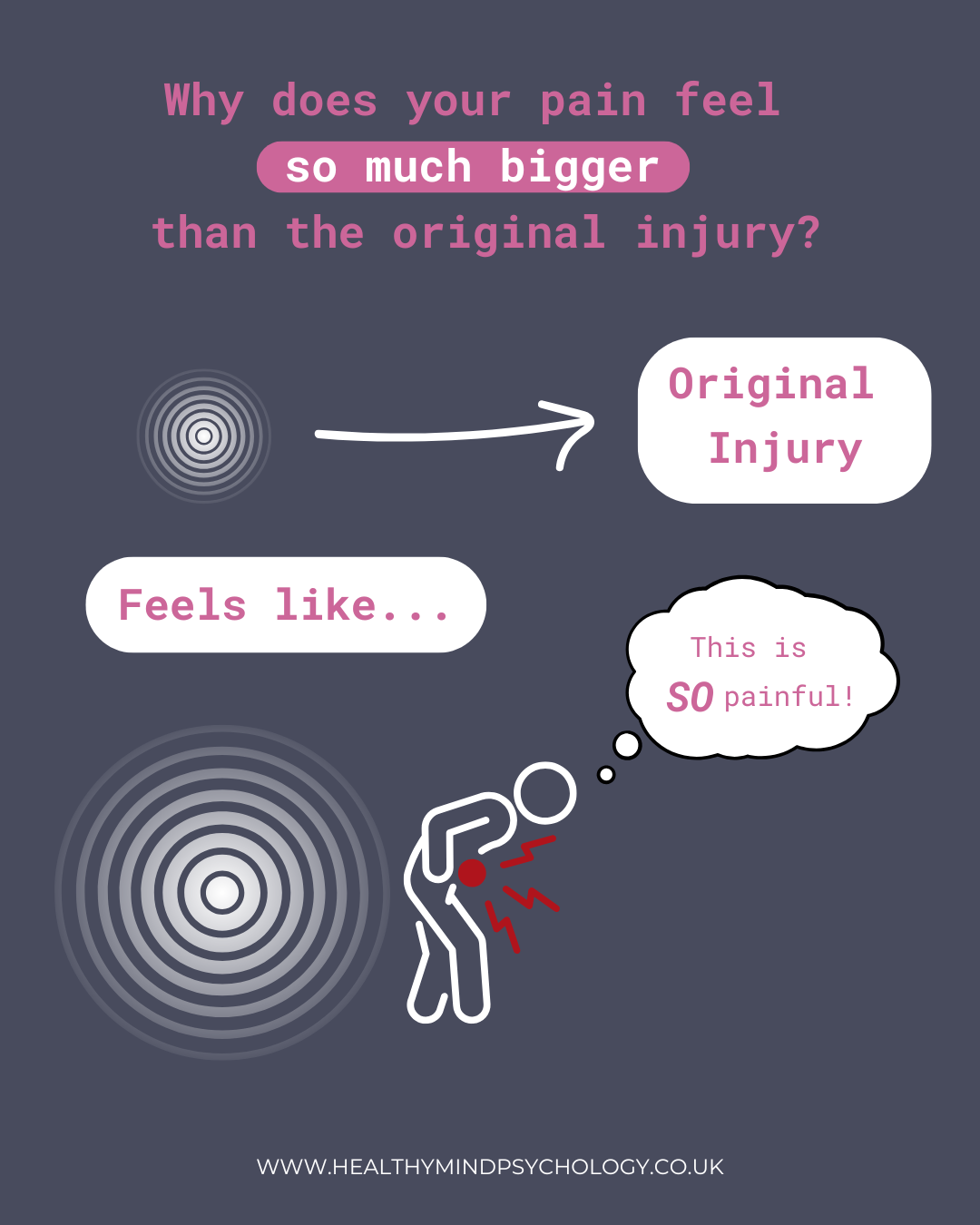
Pain is less about the size of the injury and more about how the nervous system is interpreting threat. As David Hanscom explains in Back in Control, chronic pain often emerges when the brain shifts into a persistent state of high alert, where danger signals keep firing even without ongoing harm.
When pain becomes amplified: central and peripheral sensitisation
When pain continues for weeks or months, the nervous system can become more sensitive.
Peripheral sensitisation
The nerves around an injured area become more reactive, sending stronger danger signals than before.
Central sensitisation
The spinal cord and brain begin amplifying pain signals, even when the body is no longer damaged.
Think of it like a volume knob stuck on high. The system is doing its best to protect you, but it becomes overprotective. Everyday sensations can start to feel painful. The nervous system becomes jumpy, vigilant, easily triggered.
This is not imagined pain. It is the result of real, measurable changes in neural pathways.
Neuroinflammation: when the brain’s alarm system stays switched on
Many people with chronic pain have some degree of neuroinflammation, which refers to inflammatory activity within the brain itself.
Microglial cells, the brain’s immune defenders, become activated when the body is under stress, fighting illness, or recovering from injury. When activated for long periods, they can alter:
- pain perception
- energy levels
- mood
- sleep
- cognitive clarity
This is why chronic pain often travels alongside “brain fog,” low mood, irritability, or emotional overwhelm. The body and brain are part of the same system. When one is inflamed, the other feels it too.
The gut’s surprising role in pain
We now know that the gut and brain communicate constantly through nerves, hormones, and immune pathways. This relationship is called the gut–brain axis.
When the gut microbiome is imbalanced, inflamed, or disrupted by stress, this can influence the brain’s pain processing. Studies have shown that gut inflammation increases sensitivity to pain and heightens anxiety, while a healthy microbiome can support emotional regulation and reduce pain intensity.
Which means that food, stress, sleep, infections, and even antibiotics can alter not just digestion but overall pain experience.
The gut is sometimes described as a “second brain” for a reason. It has its own nervous system, produces many of the same neurotransmitters found in the brain, and is deeply involved in regulating stress and inflammation.
The immune system’s influence on pain
Chronic inflammation in the body can act like a loud alarm. It keeps the nervous system on alert, increases sensitivity, and reinforces the pain-stress cycle.
Common contributors to inflammation include:
- long-term stress
- sleep deprivation
- loneliness
- poor gut health
- past trauma
- chronic medical conditions
When inflammation is high, pain is amplified. When inflammation drops, pain becomes more manageable.
This is why many people notice improvements when they sleep better, reduce stress, or increase social connection.
The stories we tell ourselves about pain matter
Pain is not only biological. It’s also psychological, but not in the dismissive way people often mean.
Our brains are storytelling machines.
They try to explain and predict what pain means:
“I’ll never get better.”
“This pain means something is seriously wrong.”
“I can’t trust my body anymore.”
“No one believes me.”
These thoughts are understandable, but they activate fear networks in the brain. Fear increases pain sensitivity. Pain increases fear. And the cycle strengthens.
This does not mean you are causing your pain.
It means that the nervous system is responding to a perceived threat.
This is where psychological therapies like CBT, ACT, and pain reprocessing can help interrupt the loop.
Connection, safety, and co-regulation reduce pain
Humans are wired for connection. Emotional safety calms the nervous system, reduces inflammation, and lowers pain.
Social isolation has been found to activate the same brain regions as physical pain. The WHO even identifies loneliness as one of the most overlooked health risks worldwide.
Feeling understood, supported, and connected is not “nice to have”.
It is a biological regulator of pain.
Healing pain requires a whole system approach
There is rarely one cause of chronic pain and rarely one solution. True healing often involves:
- calming the nervous system
- improving sleep
- supporting gut and immune health
- reducing inflammation
- reframing unhelpful pain narratives
- rebuilding a sense of safety
- restoring social and emotional connection
Pain is real, complex, and deeply human.
And even though it can feel relentless, the brain and body are always capable of change.
With the right support, chronic pain does not have to be a life sentence.
Healing doesn’t mean erasing pain, but shifting the system that amplifies it so that life can open up again.
To find out how we can help you or for further information you can read our services here or please contact us below: