


Have you ever found yourself wondering:
Why do I overthink things so much?
Why can’t I switch off?
Why do I rehearse conversations in my head?
Why do I keep expecting something to go wrong?
For many people, these experiences feel frustrating, exhausting, or even a little embarrassing. It’s easy to assume there’s something wrong with us if our minds seem busy, our bodies feel alert, or our thoughts keep returning to the same things.
But what if we looked at these responses differently?
What if, instead of asking, “What’s wrong with me?”, we asked:
“What if my nervous system is trying to help?”
The brain is built to protect
One of the nervous system’s primary jobs is to keep us safe.
To do that, the brain is constantly gathering information, making predictions, and preparing us for what might happen next.
Most of this happens automatically and outside our awareness.
Have you ever tensed your shoulders before opening an email?
Or felt nervous before a conversation had even started?
Perhaps you’ve spent hours imagining every possible outcome of a situation that hasn’t happened yet.
The brain is not simply reacting to the present moment. It is constantly asking:
- Is this safe?
- Have I experienced something like this before?
- What should I prepare for?
In many ways, the nervous system is like an incredibly diligent personal assistant. It is always trying to anticipate, organise, and prepare.
Sometimes it gets things right.
And sometimes it prepares for things that may never happen.
But often, it’s trying to help.
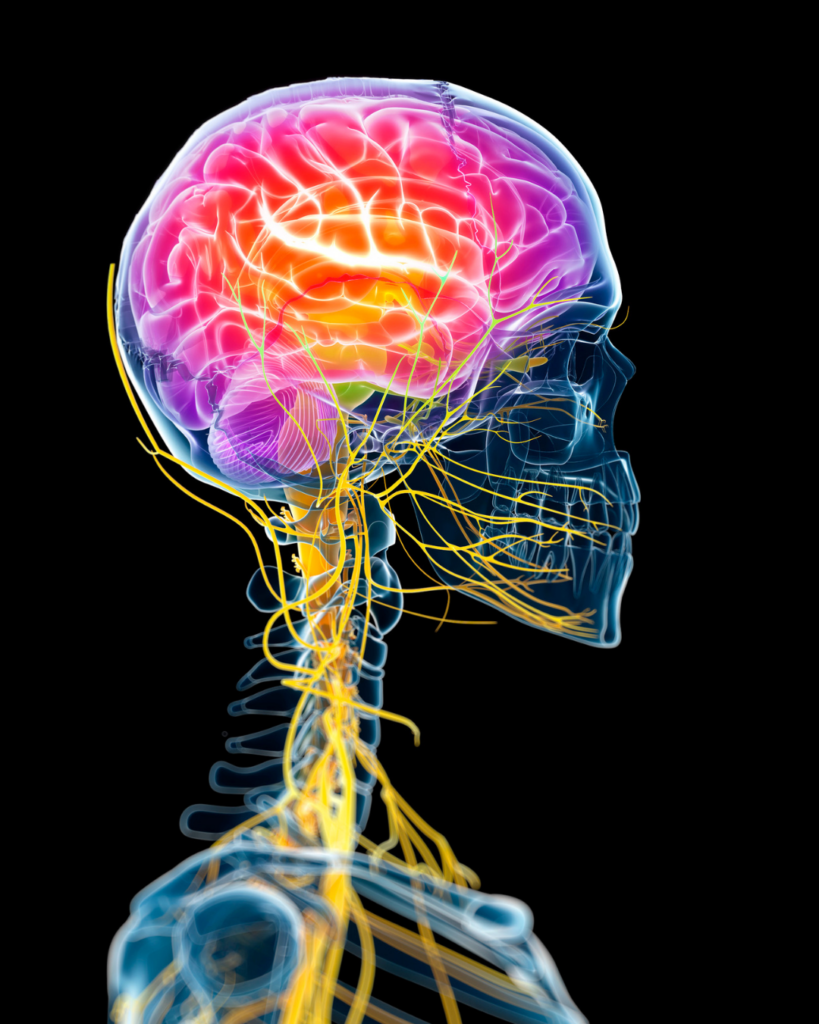
Why do we rehearse conversations?
Have you ever had an entire conversation in your head before it happened?
Or replayed one afterwards and thought of all the things you wish you’d said?
This can feel like overthinking, but it may also be a form of preparation.
The brain doesn’t particularly like uncertainty. When something feels important or unpredictable, it often tries to rehearse different possibilities in an attempt to help us feel more ready.
It can be exhausting.
But perhaps it’s less about being “bad at switching off” and more about a system trying to create a sense of safety through preparation
Why is it so hard to relax?
This is something I hear people talk about often.
They finally have time to rest… and yet they still can’t fully settle. Their body feels restless, their mind keeps going, relaxation feels strangely difficult.
Have you ever experienced that?
The nervous system doesn’t respond to logic alone. You can know that you’re safe and still not feel safe. Sometimes the system has spent so long adapting to stress, pressure, uncertainty, or unpredictability that alertness has become its default rhythm.
The body isn’t necessarily refusing to relax. It may simply be doing what it has learned to do.

Why do familiar patterns keep returning?
Have you ever promised yourself you’d stop doing something… and then found yourself slipping back into the same pattern?
Perhaps it’s:
- staying busy
- overworking
- expecting the worst
- people pleasing
- constantly checking your phone
This can feel frustrating.
But the nervous system often prefers familiarity over change, not because familiar is always healthy, but because familiar is predictable, and predictability can feel safer to the brain than the unknown.
Understanding this doesn’t mean we stay stuck in old patterns, but it can soften the self-criticism that often accompanies them.
Why does uncertainty feel so exhausting?
Waiting for results.
Waiting for an email.
Not knowing where you stand with someone.
Many people describe uncertainty as physically tiring.
And that makes sense.
The brain likes prediction.
When outcomes are unclear, the nervous system often remains more alert while continuing to search for answers and possibilities.
Sometimes the exhaustion we feel isn’t because we’ve done too much, it’s because our minds have been carrying too many unanswered questions.
A different way of understanding ourselves
I think many of us spend a lot of time fighting against our own responses.
Trying to stop overthinking.
Trying to switch off.
Trying to be different.
And sometimes those efforts come from a place of believing that something is wrong with us.
But what if some of these experiences make more sense than we realise?
What if many of our responses are not signs of weakness, failure, or brokenness…
…but signs of a nervous system trying to help us navigate the world as best it can?
This doesn’t mean every response is helpful or that we should never want things to change.
It simply invites a different kind of conversation, one that is perhaps a little more curious, a little more compassionate, and a little less critical.
Because sometimes understanding changes the relationship we have with ourselves.
So perhaps the next time you find yourself asking:
“Why am I like this?”
You might gently wonder:
“What if my nervous system is trying to help?”
If you or someone you know is struggling and would benefit from support, Healthy Mind Psychology is here to help. See our services available here or contact us below.